
The Secret to a Luxury Day Spa Feel


The Bathroom Lighting Layering Formula
Have you ever walked into a freshly renovated bathroom only to feel an unexpected chill? On paper, the marble is stunning, the tapware is premium, and the stone vanity is immaculate. Yet under the flick of a single switch, the entire room is flooded with a blinding, sterile glow. It feels less like a private sanctuary and more like a cold, harsh hospital room.
Now, contrast that with the feeling of stepping into a luxury day spa. The atmosphere is immediately calming, the textures look rich, and you feel an instant sense of relaxation.
What separates these two experiences isn’t the price tag of the tiles—it is the execution of the lighting.
When interior designers plan a high-end bathroom renovation, they don’t just place a couple of downlights in the ceiling and call it a day. To create an elite sanctuary, we design using a formula known as Lighting Layering—combining ambient, task, and accent lighting on separate circuits to completely transform both the mood and the functionality of the space.
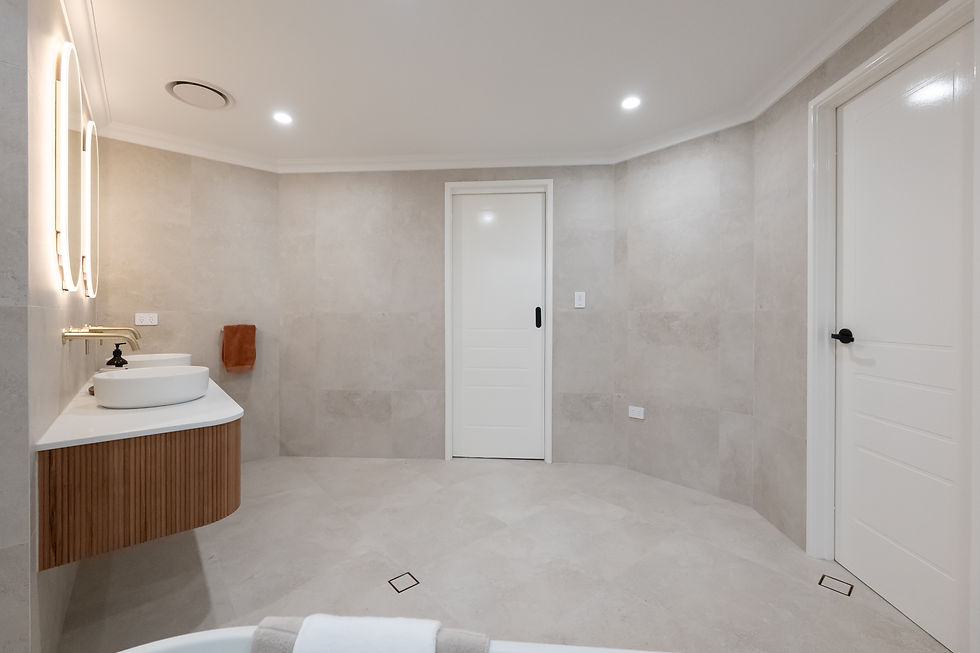

Layer 1: Ambient Lighting (The Base Layer)
Ambient lighting serves as your general illumination, providing the foundational base of light that allows you to safely navigate the room. While strategically placed LED downlights form the foundation of this layer, relying on them entirely is the number one reason bathrooms feel sterile. Downlights push light strictly downward, creating harsh contrast and leaving the walls in shadow.
To elevate this layer, top interior designers love to incorporate elegant designer wall sconces.
A wall sconce casts a soft, warm lateral glow across the zone, immediately softening the hard surfaces of porcelain and stone. By bouncing light off the walls rather than just blasting it from the ceiling, this lateral illumination instantly makes the room feel incredibly welcoming and architecturally cohesive.

Layer 2: Task Lighting (The Functional Layer)
While ambient light sets the stage, task lighting provides the precision where you need it most. In a bathroom, this is specifically centered around the vanity mirror—the zone where you shave, apply makeup, or complete your nightly skincare routine.
Achieving proper task lighting requires avoiding a major layout mistake: placing downlights directly overhead. Overhead lighting hits the top of your head, casting dark, unflattering shadows under your eyes, nose, and chin.
Instead, the modern standard integrates backlit LED mirrors or precisely positioned, face-level lights. This placement illuminates you evenly from the front, bathing your face in a shadow-free, natural light that makes daily routines effortless.
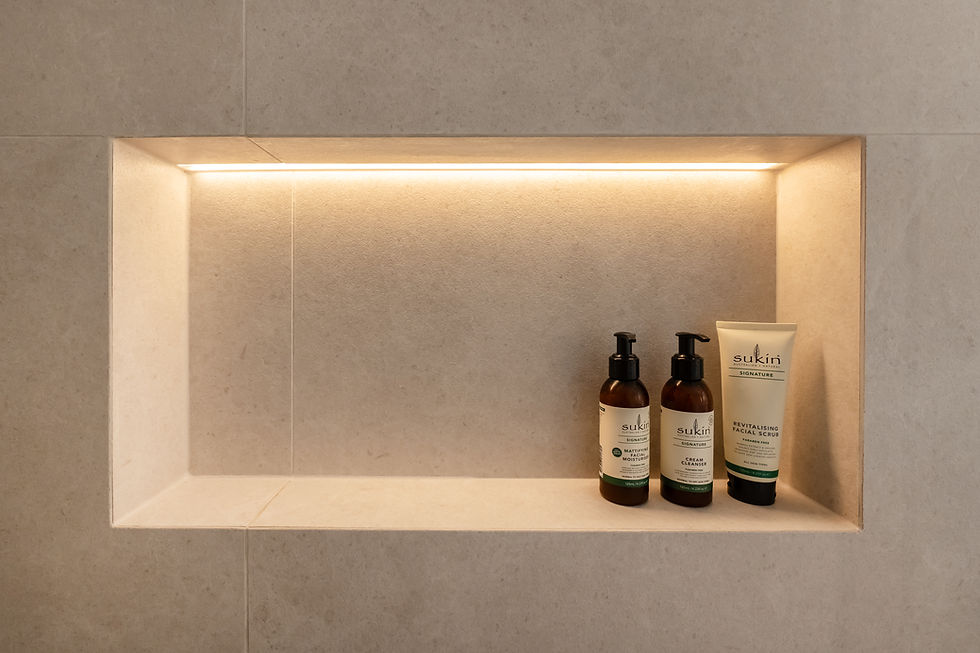
Layer 3: Accent Lighting (The Mood Layer)
If ambient light is functional and task light is precise, accent lighting is where the pure design magic happens. This layer isn't about helping you see better; it is about drawing the eye to premium architectural details and establishing an upscale atmosphere.
Bathrooms are naturally full of hard, reflective surfaces. Accent lighting introduces warmth and depth by hiding the light source and letting the glow do the work. Two highly effective design techniques include:
Custom Shower Niches: Installing subtle, waterproof LED strip lighting inside a tiled shower niche completely transforms a functional shelf into a dramatic design feature.
Under-Vanity Lighting: Running a hidden LED strip underneath a floating timber vanity casts a soft, low-glare pool of light onto the floor. This makes the heavy cabinetry look weightless, as if it is floating on a bed of light.
This soft, low-glare glow is the ultimate setting for a relaxing evening soak in the bath when you want to wash away the day without a bright light shining in your eyes.

Total Control: The Power of Independent Circuits
A truly premium bathroom shouldn’t just look beautiful under a single, all-or-nothing switch. The real secret to the luxury spa experience lies in how these layers are wired.
By splitting these three distinct layers onto separate, dimmable circuits, you gain absolute control over the environment.
In the morning, you can turn on the ambient and task layers for a bright, high-energy, functional space to jumpstart your day. In the evening, you can turn those off entirely and leave only the dim, golden accent strips active under the vanity and inside the shower niche.
By thinking of your lighting as an evolving system rather than a utility, you turn a simple bathroom into an elite home sanctuary.


The article offers a fascinating perspective on the importance of lighting in creating a desirable bathroom atmosphere. The concept of Lighting Layering is critical, yet often overlooked, which leads to the feeling of sterility instead of warmth. Much like how Thepokies can draw players into a thrilling experience, effective lighting must engage the senses and elevate the overall mood of a space. It's about creating an emotional response.
The article raises intriguing points about the significance of lighting in creating inviting spaces. It makes me consider how interior design parallels other areas, including entertainment. For instance, just as layered lighting can transform a bathroom into a sanctuary, the experience https://www.postbank.co.nz/ is enhanced by atmosphere and detail. It's not solely about the game mechanics; it's about how the environment makes players feel engaged and comfortable.
The overall impression is that the analytical tone is consistent across all thematic sections. Observations remain closely tied to empirical foundations. The website presents a deeper contextual view of the topic. Behavioural scaling is represented through online entertainment interfaces.