
Choosing the Best Benchtop Materials for Your Renovation
- Elite Makeovers
- Jan 2
- 5 min read
Premium renovation is one of the most impactful upgrades you can make to your home. Not only does it increase property value, but it also improves functionality, enhances energy efficiency through modern appliances, and allows for a more personalised, considered design.
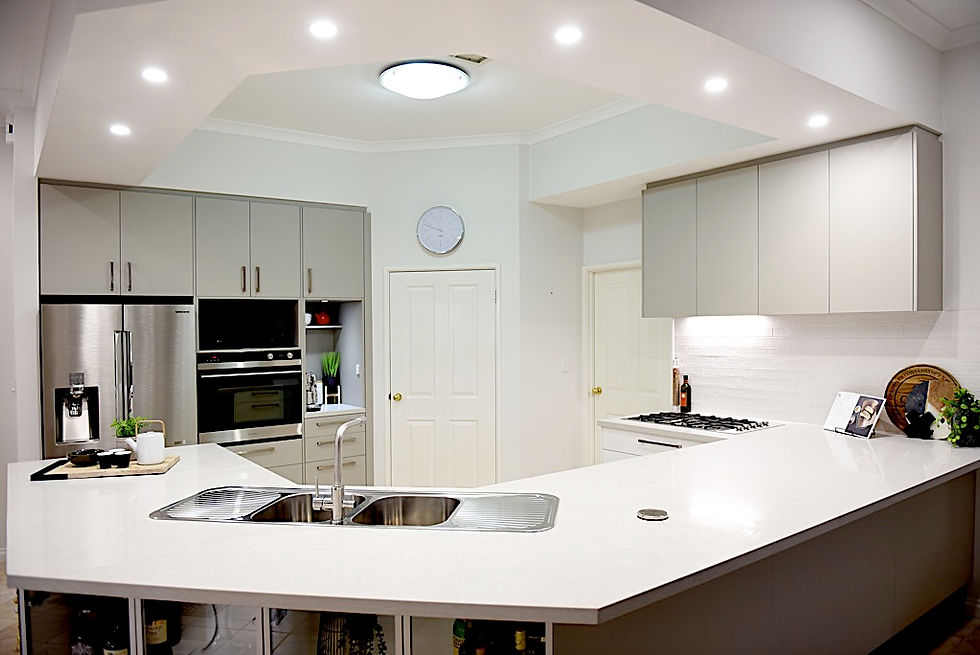
Beyond cabinetry, benchtops are one of the largest investments in a kitchen renovation. In fact, Australians typically allocate 15–25% of their renovation budget to benchtops alone. With options ranging from stone and acrylic to laminate, timber, and concrete, choosing the right material is essential to achieving both beauty and longevity.
What are the Most Popular Benchtop Materials?
With more benchtop materials available than ever, homeowners now have incredible flexibility when designing their kitchens. While the choice can feel overwhelming, Elite Makeovers can help homeowners understand the strengths and limitations of each material makes the decision far easier.
Below are some of the most popular benchtop materials used in Australian homes.
Laminate
Laminate benchtops remain one of the most popular choices for modern kitchens, particularly for budget-conscious renovations and DIY projects. They are easy to maintain, resistant to stains, and available in a wide variety of colours and finishes.
While laminate is durable, care should be taken to avoid direct heat and sharp objects. Using trivets for hot cookware and chopping boards for food preparation will help maintain the surface over time.
Advantages
✔️ Cost-effective compared to stone and acrylic
✔️ Easy to maintain and clean
✔️ Ideal for DIY installations
✔️ Wide range of colours and finishes
✔️ Australian-made options available
Disadvantages
❌ Less heat-resistant than stone
❌ Can be susceptible to water damage if not sealed correctly around sinks
Acrylic
Acrylic benchtops are known for their seamless joins, smooth finish, and hygienic properties. Liquids won’t penetrate the surface, making them resistant to staining and easy to clean. Minor scratches and wear can also be polished out, restoring the benchtop to its original finish.
Thanks to their flexibility, acrylic benchtops can be moulded into custom shapes, making them a great choice for contemporary and bespoke kitchen designs.
Advantages
✔️ Seamless, non-porous surface
✔️ Hygienic and easy to maintain
✔️ Repairable and refinished over time
✔️ Wide range of colours and styles
✔️ Australian-made options available
Disadvantages
❌ More expensive than laminate
❌ Lower heat resistance than stone
Timber
Timber benchtops bring warmth, character, and a natural aesthetic to any kitchen. Each benchtop is unique, with variations in grain and colour that add charm and personality.
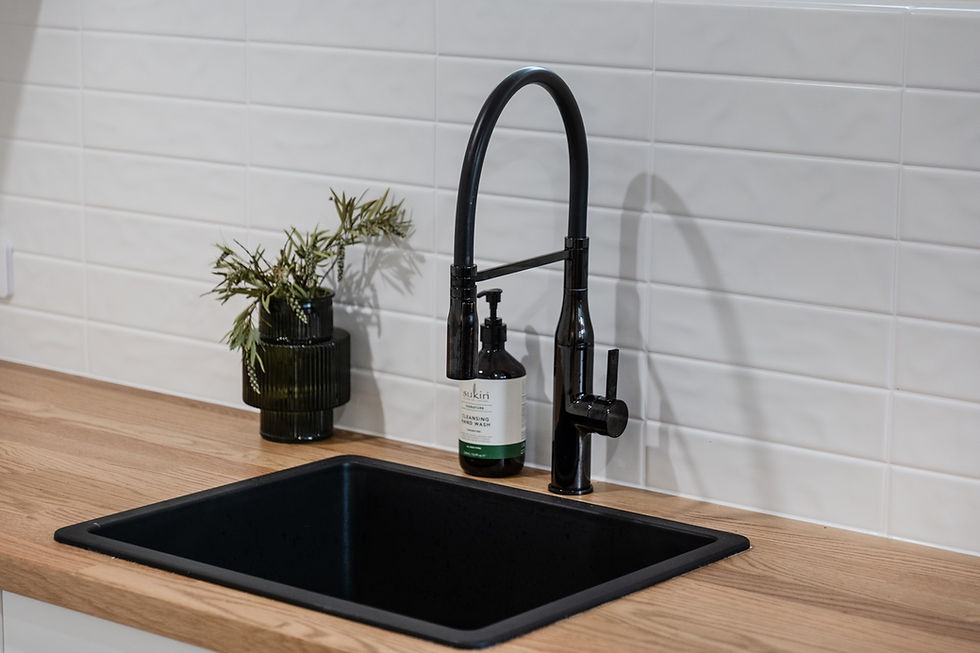
Timber surfaces must be sealed using food-safe oil or polyurethane before use. Oiled finishes require regular reapplication, while polyurethane coatings last longer but require sanding for refinishing.
Advantages
✔️ Warm, natural appearance
✔️ Unique grain and character
✔️ Can be sanded and refinished
✔️ Timeless appeal
Disadvantages
❌ Colour variation between slabs
❌ Regular maintenance required
❌ Less forgiving for DIY installations
Engineered Stone
Engineered stone is a popular choice for premium kitchen renovations, offering durability, consistency, and a wide colour selection. Made from natural aggregates and resins, engineered stone delivers the look of natural stone with enhanced performance.
Many modern engineered stone options are now manufactured without silica, improving safety while maintaining strength and style.
Advantages
✔️ Highly durable and scratch-resistant
✔️ Consistent colour and pattern
✔️ Low maintenance compared to natural stone
✔️ Wide range of colours and finishes
Disadvantages
❌ Higher cost than laminate and acrylic
❌ Less heat-resistant than natural stone
❌ Professional installation required
Natural Stone
Natural stone benchtops offer unmatched beauty, with no two slabs ever exactly alike. Materials such as marble, granite, and limestone add a sense of luxury and exclusivity to any kitchen.
Natural stone can be finished in either a polished (gloss) or honed (matt) finish. While incredibly durable, stone is porous and requires sealing to protect against stains and moisture.
Advantages
✔️ Unique, one-of-a-kind appearance
✔️ Adds luxury and long-term value
✔️ Heat-resistant and durable
✔️ Available in polished or matt finishes
Disadvantages
❌ Requires regular sealing
❌ Can stain if spills aren’t cleaned promptly
❌ Heavier material needing strong cabinetry
❌ Higher cost compared to other options
Concrete
Concrete benchtops are a bold choice, offering an industrial, contemporary aesthetic. They are custom poured to suit any layout and can be finished in a range of textures and colours.
Concrete is highly heat-resistant and durable, but it is naturally porous and must be sealed correctly. Over time, minor cracking may occur if not installed properly, making professional installation essential.
Stainless Steel
Commonly used in commercial kitchens, stainless steel benchtops are prized for their durability, heat resistance, and hygiene. Seamless joins between benchtops, sinks, and splashbacks make them easy to clean and highly practical.
Although scratches can develop over time, the surface can be re-polished to restore its finish.
Can Kitchen Benchtops be Used in Bathrooms and Laundries?
Yes! Many homeowners choose to use the same benchtop material across kitchens, bathrooms, and laundries for a cohesive look. Others prefer to keep a consistent colour palette while varying materials between spaces.
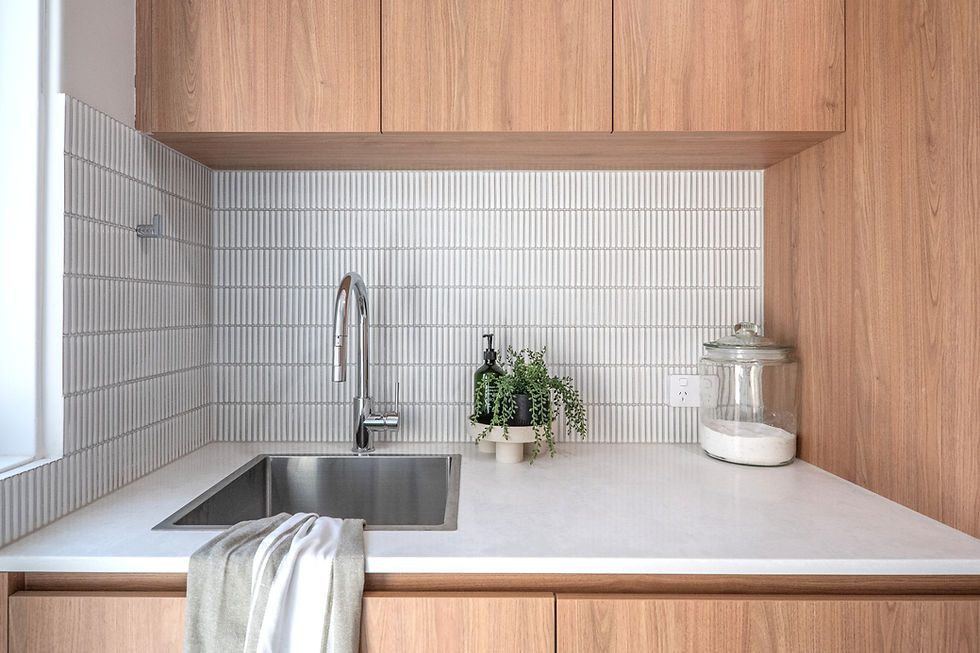
The right choice ultimately depends on your budget, design vision, and how each space is used.
Stone vs Laminate Benchtops: Which is Better?
Both stone and laminate benchtops have their place in renovation design.
Feature | Stone | Laminate |
Price | Higher, premium investment | More affordable |
Durability | Very durable, heat-resistant | Durable but heat-sensitive |
Colours | Natural tones with variation | Vast colour and pattern range |
Finishes | Polished or matt | Matt, gloss, textured, woodgrain |
Stone suits homeowners seeking longevity and luxury, while laminate is ideal for stylish renovations on a tighter budget.
Is a 20mm or 40mm Benchtop Better?
Benchtop thickness plays a significant role in the overall design.
20mm benchtops suit modern, minimalist kitchens
40mm benchtops create a more substantial, luxurious look and are popular in classic or Hamptons-style designs
Your choice should balance aesthetics, cabinetry style and budget.
Factors to Consider When Choosing a Benchtop Material
When selecting a benchtop, consider:
How you use your kitchen, bathroom and laundry day-to-day
Your budget and long-term maintenance preferences
Heat, scratch, and stain resistance
How the benchtop complements cabinetry, flooring, and lighting
Balancing durability, visual appeal, and upkeep will ensure your benchtop stands the test of time.
Choosing the Best Benchtop Material for Your Space
Selecting the right benchtop material is essential to achieving the perfect blend of style, functionality, and durability across your kitchen, bathroom, or laundry. Whether you’re drawn to the elegance of stone, the affordability of laminate, or the sleek appeal of acrylic, there’s a solution to suit every lifestyle and design vision.
If you’re planning a kitchen, bathroom, or laundry renovation, Elite Makeovers offers expert guidance and bespoke design solutions to help you select the perfect benchtop for your space. Our experienced team works closely with you to balance style, functionality, and durability, ensuring a result that enhances both your home and lifestyle.
Book a consultation with Elite Makeovers today by calling 0404 333 995 or emailing phil@elitemakeovers.com.au, and let us help you create a refined, functional space you’ll enjoy for years to come.

The article on benchtops highlights a complex decision-making process for homeowners, especially with the variety of materials available. Understanding a material's strengths and limitations is crucial, as is considering the long-term maintenance required. For instance, while Playfina offers a contemporary aesthetic, its heat and stain resistance must align with practical kitchen use. Balancing these factors is essential for a successful renovation.
The article does a commendable job outlining the various benchtop materials, but it lacks deeper exploration into the environmental implications of sourcing these materials. For instance, while selecting a benchtop, it’s crucial to consider not just aesthetics and cost, but also sustainability and the impact of choices like Pay ID https://www.nogod.org.nz on the overall supply chain. How do different options affect our ecological footprint?
The continuous expansion of Google and Amazon’s Data Centres raises interesting questions about the sustainability of such growth. As these companies push boundaries, we must consider the implications on energy consumption and local ecosystems. The rapid development mirrors trends in industries like casino gaming, where Royal Reels www.nzartmonthly.co.nz is a pertinent example of how digital transformation impacts traditional sectors.
It's interesting to consider how economic thought leaders like Ross Gittins shape public discourse. In discussing complex issues, particularly when it comes to topics such as The Pokies https://apathrift.org/ and their impact on local economies, Gittins provides clarity that many lack. This critical analysis helps navigate the intertwined nature of entertainment, regulation, and financial well-being in society.